What regrading is meant to accomplish
- 01Establish positive slope away from the foundation for the first several feet in every direction.
- 02Remove or fill the low bowls that trap water in the middle of a lawn.
- 03Create a continuous path for surface water to travel toward a discharge area rather than stalling.
- 04Reduce the concentrated flow that cuts erosion channels through red clay on sloped lots.
- 05Prepare a surface that turf can hold, so the new grade does not wash out in the first storm.
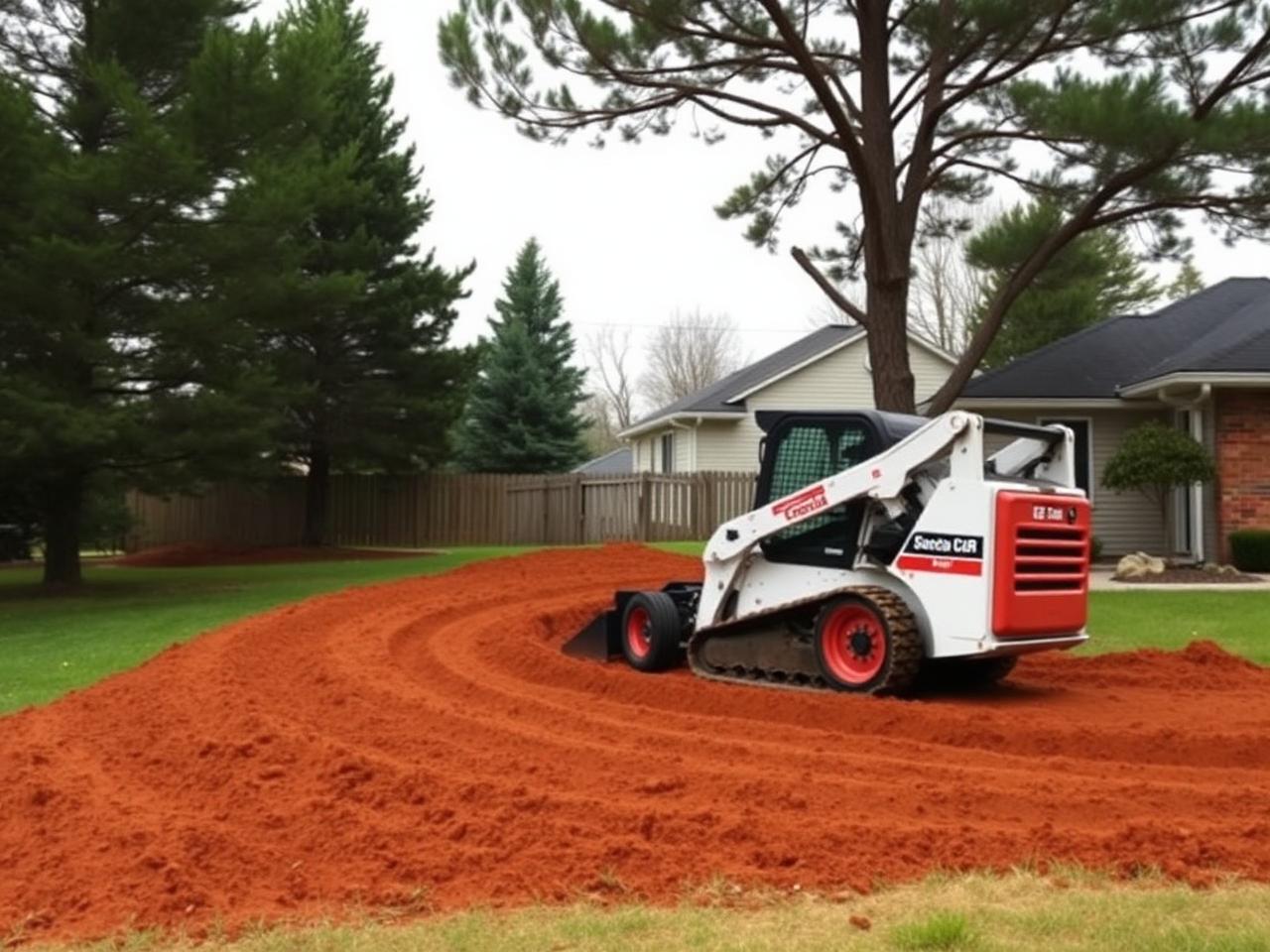
Grading in clay is a compaction problem
Fill placed on Upstate clay without proper compaction settles, and a settled area becomes the new low spot within a season or two. Material choice and lift thickness matter as much as the final contour.
Topsoil depth matters too. A finished grade of pure clay sheds water fast but grows poor turf, and thin bare areas quickly erode into channels. Grading work that ignores the growing surface tends to undo itself.
Situations where grading is the primary fix
- The ground slopes back toward the house — negative grade at the foundation.
- A shallow, broad low area holds water but has a viable downhill path nearby.
- Runoff from an uphill property crosses the lot without any defined channel.
- Settlement around a newer home has created a ring of low ground near the foundation.
- A previous landscaping project raised beds and trapped water behind them.
When grading alone is not enough
No downhill path exists
On a genuinely flat lot, reshaping has nowhere to send water. Collection and piped conveyance take over.
The wet area is subsurface
Water moving through the soil below the surface is not redirected by shaping the top of it.
Volume is concentrated
High roof volume in one spot usually needs to be piped, then the grade handles the rest.
Hardscape sets the elevation
Patios, walls and driveways fix the grade in place; drains work around them.
Grading changes where water goes. Before reshaping a boundary area, it is worth confirming that the new path does not concentrate runoff onto an adjoining Upstate property.
Questions homeowners ask
How much slope should the ground have away from a house?
The general principle is a consistent fall away from the foundation across the first several feet, then a continued path downhill. The exact figure varies with soil and site conditions, and hardscape or existing structures often constrain it.
Will regrading kill my existing lawn?
The areas being cut or filled are disturbed and need re-establishment with seed or sod. Grading projects are usually planned around the seasons when Upstate turf establishes best.
Can grading fix water in a crawlspace?
It frequently reduces the surface water reaching the foundation, which is often the largest contributor. If water is entering from a different source, grading alone will not resolve it.
Is grading cheaper than installing drains?
Often, but not always. Small contour corrections can be inexpensive, while significant cut-and-fill with soil import, access limits and full turf restoration can exceed the cost of a modest piped system.
Keep reading
Wondering if grading would be enough?
Send photos of the slope and the wet area. Sometimes the answer is dirt work, not drain pipe.