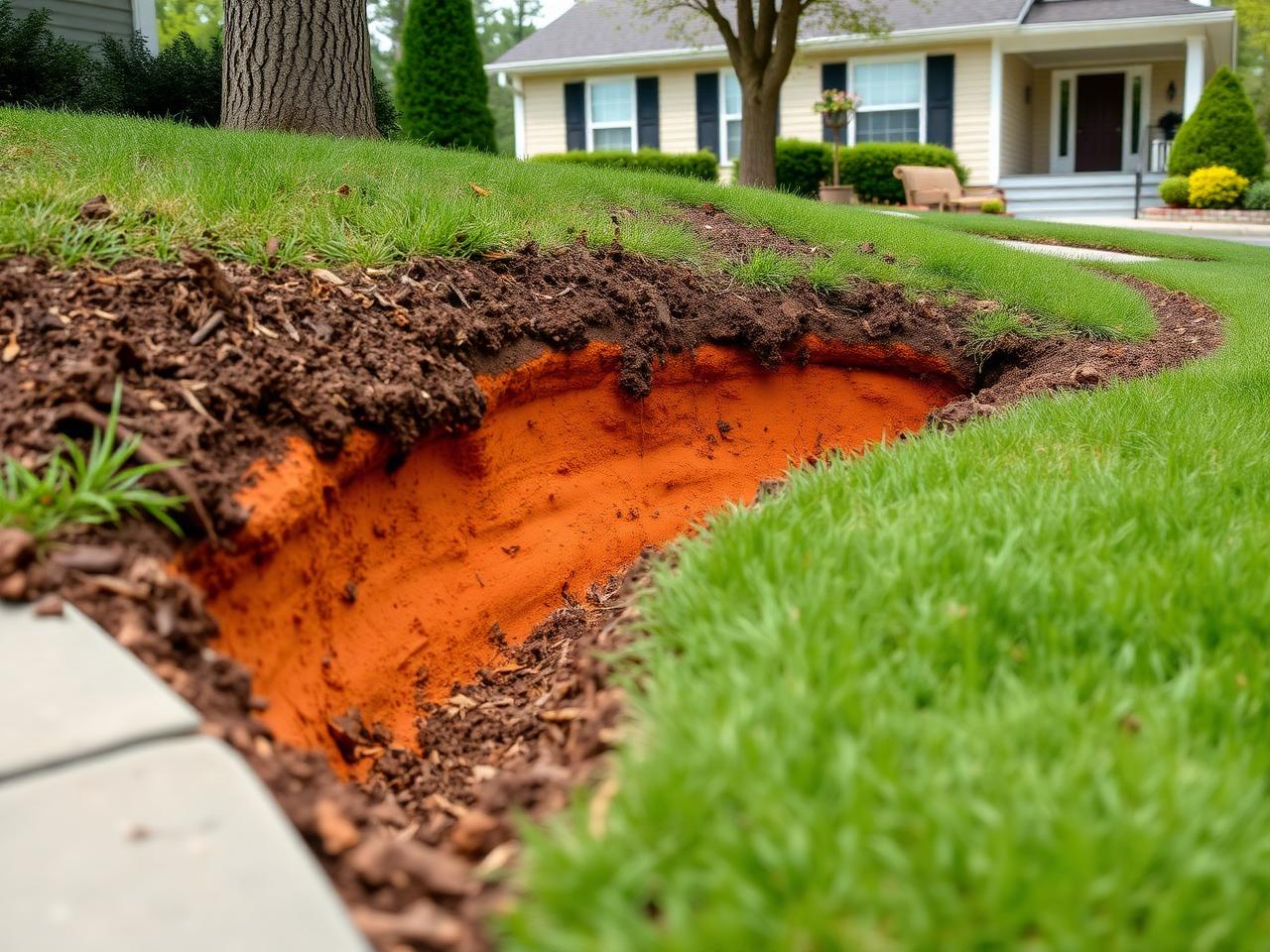
A different failure mode
On steep ground, the problem is rarely a puddle. It is a scoured channel through the lawn, mulch relocated onto the driveway after every storm, exposed clay where turf used to be, and a lower corner of the property that receives everything from above.
- Erosion channels that deepen slightly with each heavy rain.
- Silt and gravel deposited on walks, patios and pavement below.
- Retaining wall drainage that is overwhelmed or blocked.
- Water arriving at the house from uphill rather than pooling around it.
- A lower neighbor receiving concentrated flow that used to spread out.
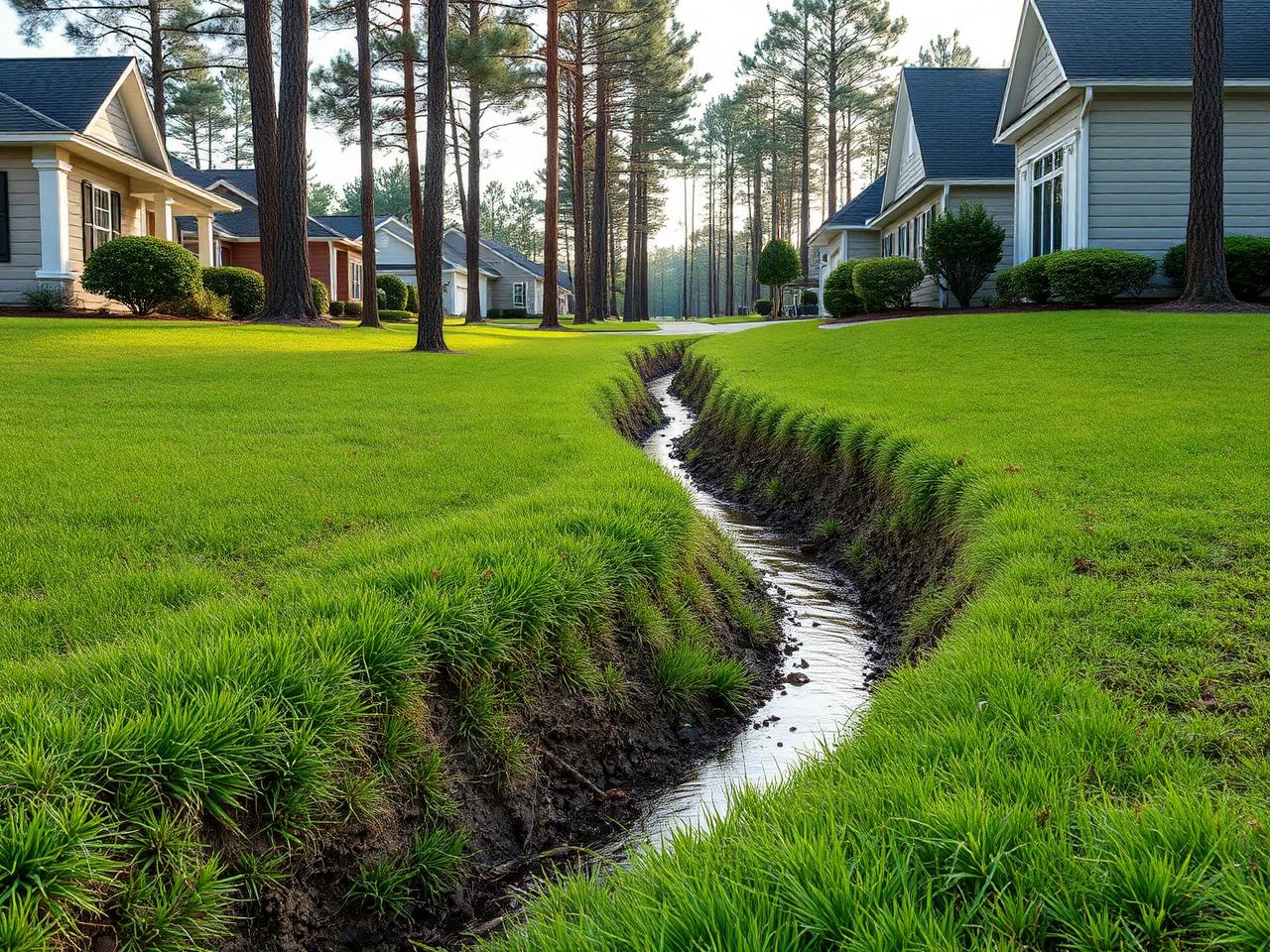
Slow it, spread it, then route it
The order matters on a hillside. Interception near the top of the slope reduces how much water ever reaches the vulnerable ground below. Spreading flow across a broad, stabilized path cuts velocity so the clay is not scoured.
Only then does routing to an outlet make sense. Piping high-velocity water straight downhill without those first two steps concentrates the energy at the discharge point instead of solving it.
Service emphasis for Travelers Rest properties
Uphill interception
Swales or drain lines placed above the area being protected.
Erosion-resistant grading
Broad shaping, soil preparation and stabilized cover in flow paths.
Stepped or armored channels
Stone-lined sections where slope makes turf unsustainable.
Protected discharge
Outlets designed so the water leaving does not cut a new channel.
On steep lots, the discharge point deserves as much design attention as the collection point. Concentrated water leaving a pipe at speed will find something to erode.
Questions homeowners ask
Why does a steep yard need drainage at all if water runs off?
Because fast-moving water removes soil. The cost on a hillside shows up as erosion, lost turf, undermined walls and sediment deposited where you do not want it.
Will a French drain work on a steep slope?
It can, typically as an interceptor placed across the slope above the area being protected. On very steep ground, surface measures that slow and spread flow often do more than a buried line.
What about water coming from an uphill neighbor?
Interception at or near the upper boundary is the standard approach. Where volume is significant, it is worth checking local rules and any recorded drainage easements before building.
Drainage services for Travelers Rest
Runoff cutting through a hillside lot?
Tell us where the water enters at the top and what it damages on the way down.