Symptoms and what they usually mean
Water pools directly over the drain line
The stone or fabric around the pipe has likely silted in, so surface water can no longer reach the pipe.
The outlet trickles or runs dry during heavy rain
The line may be blocked upstream, crushed, or disconnected at a joint.
The outlet is under mulch, soil or turf
A buried daylight point backs the whole system up. This is one of the easiest failures to correct.
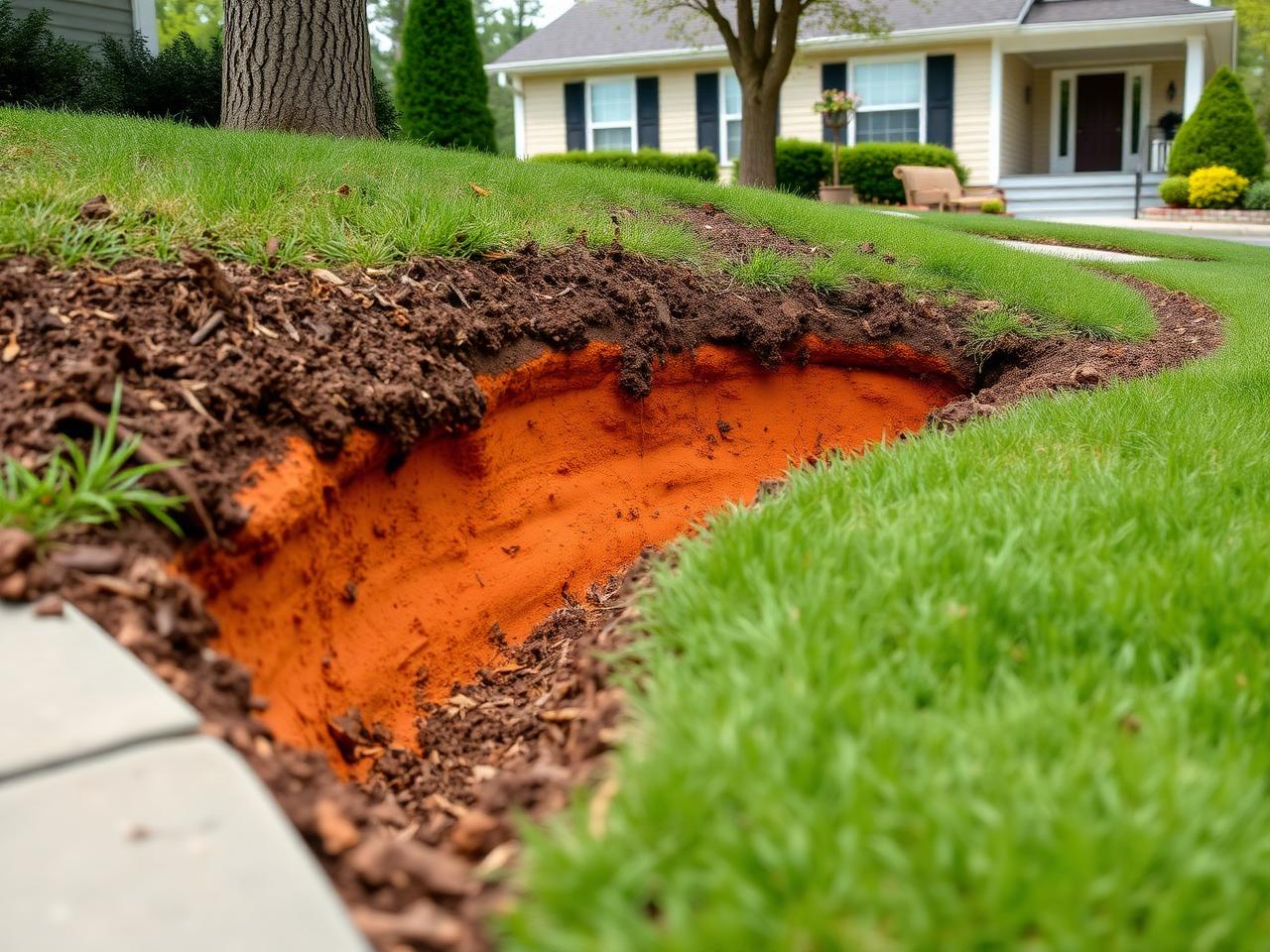
A soft, sunken trench line across the lawn
Backfill settled or the pipe collapsed. Sunken lines also collect water rather than shedding it.
Why Upstate installations fail early
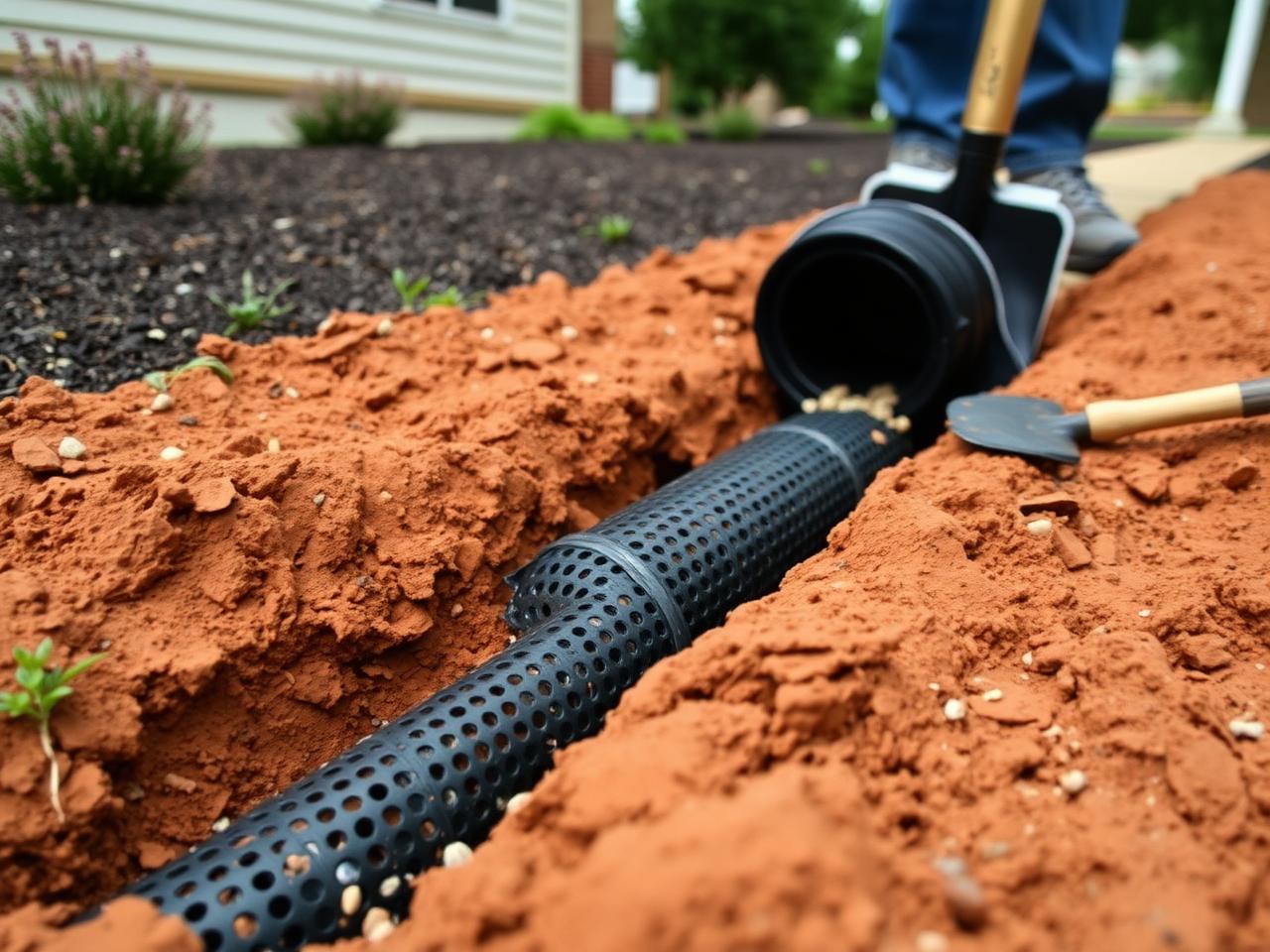
Red clay fines are the usual culprit. Without filter fabric, or with a fabric that was wrapped only around the pipe instead of lining the trench, clay migrates into the aggregate and closes the void space.
Second on the list is pitch. A drain that runs flat or dips mid-run holds water and silt at the low point. Third is the outlet — mowers, mulch and settling soil bury daylight points constantly.
How a repair is scoped
- 01Locate the run, the inlets and the outlet, and confirm what the system was originally designed to collect.
- 02Test flow at the outlet during or after rain, or by introducing water at the upstream end.
- 03Excavate at the suspected failure point rather than the entire line where possible.
- 04Decide between spot repair, partial replacement of a silted section, or rebuilding the run with proper fabric, stone and pitch.
- 05Re-establish and protect the outlet so it stays visible and clear.
Repair is not always the economical choice. When a line was installed without fabric or without fall, rebuilding a shorter, correctly designed run often outperforms patching a long failing one.
What to check before submitting a repair request
- Do you know roughly where the line runs and where it discharges?
- Is the outlet visible, or has it disappeared under landscaping?
- Does water pool along the whole line, or only in one section?
- Has anything changed nearby — new patio, regrading, added downspouts, new construction uphill?
- Do you know who installed it and roughly when?
Questions homeowners ask
Can a clogged French drain be flushed instead of dug up?
Jetting or flushing can clear sediment inside the pipe, and it sometimes restores flow. It does not restore aggregate around the pipe that has packed with clay fines, which is the more common Upstate failure mode.
How can I tell if the pipe is crushed?
A soft or sunken line, water surfacing at one specific point, and an outlet that runs weakly during heavy rain all point that way. Camera inspection or a targeted excavation at that point confirms it.
Is it worth repairing a drain that was installed badly?
Sometimes the failure is one correctable detail, such as a buried outlet or a single flat section. When fabric was omitted entirely along the full run, a rebuild of the section that matters is usually the better investment.
Do roots damage French drains in the Upstate?
Roots can enter perforated pipe at joints and openings, particularly near mature trees. It is a less frequent cause here than silting, but it is worth checking on wooded lots.
Keep reading
Have a drain that stopped working?
Tell us what the system does during a storm and where the water shows up. That detail usually narrows the failure point quickly.