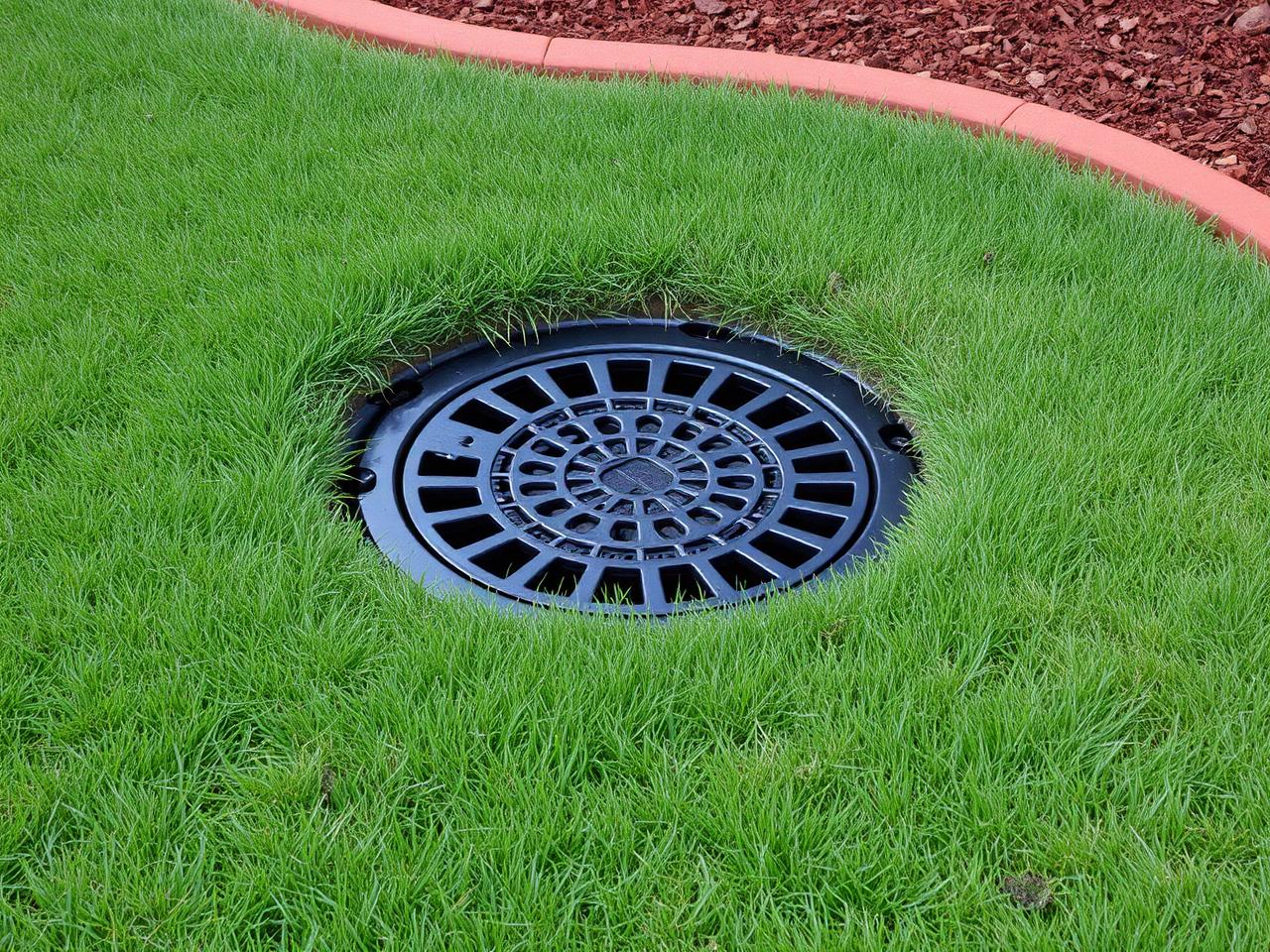
What a catch basin does that a French drain cannot
A catch basin accepts a large volume of surface water quickly. A French drain accepts water slowly, through soil and stone. When the problem is a puddle that forms in minutes during an Upstate downpour, speed of intake matters.
The basin also has a sump below the outlet where leaves, clay silt and grit settle out. That sediment can be scooped out later instead of packing into the pipe network.
Where basins are typically set
- The natural bowl in the middle of a back lawn where water already gathers.
- The bottom of a slope where runoff arrives from an uphill neighbor.
- Beside a patio or walkway that traps water against the hardscape edge.
- At the base of downspout lines, so roof water enters a serviceable structure.
- In a side yard between homes where two roof planes and two grades converge.
How the installation goes together
- 01Confirm the true low point with water or a level — the visual low point is not always correct.
- 02Set the basin so the grate sits slightly below finished grade and the lawn drains into it.
- 03Connect solid, smooth-wall outlet pipe with continuous fall to the discharge point.
- 04Backfill and compact around the structure so it does not settle and tip.
- 05Restore turf tight to the grate so the mower passes cleanly over it.
Single basin
One intake in a clear low area with a short run to daylight. The most common Greenville configuration.
Basin network
Several inlets across a larger yard, tied into a shared trunk line to one outlet.
Basin plus French drain
Surface intake for fast volume, subsurface line for the saturated ground around it.
Basin plus downspout lines
Roof water and yard water combined into one managed, cleanable system.
A catch basin only performs as well as its outlet. If the pipe leaving the basin has no fall or discharges uphill, the basin becomes a holding tank.
Questions homeowners ask
Do catch basins need cleaning?
Yes. The sump collects leaves and clay sediment by design, and clearing it periodically is what keeps the outlet pipe free. Most homeowners can lift the grate and remove debris themselves.
Will the grate be a hazard in the lawn?
Basin grates are designed to sit flush with finished grade so mowers and foot traffic pass over them. Correct setting depth and compaction around the structure are what prevent a raised or sunken edge.
How many basins does a yard need?
It depends on how many separate low points collect water and how far apart they are. Some Greenville yards need one; larger sloped lots with several collection areas may need a small network on a shared trunk line.
Can a catch basin handle water from my downspouts too?
Often yes, and combining them can simplify the system. Sizing matters, because roof volume during a heavy Upstate rain is substantial.
Keep reading
One puddle, or several?
Send a photo of the low area during rain. Where the water gathers tells a pro how many intakes the yard really needs.