What a yard drainage project actually covers
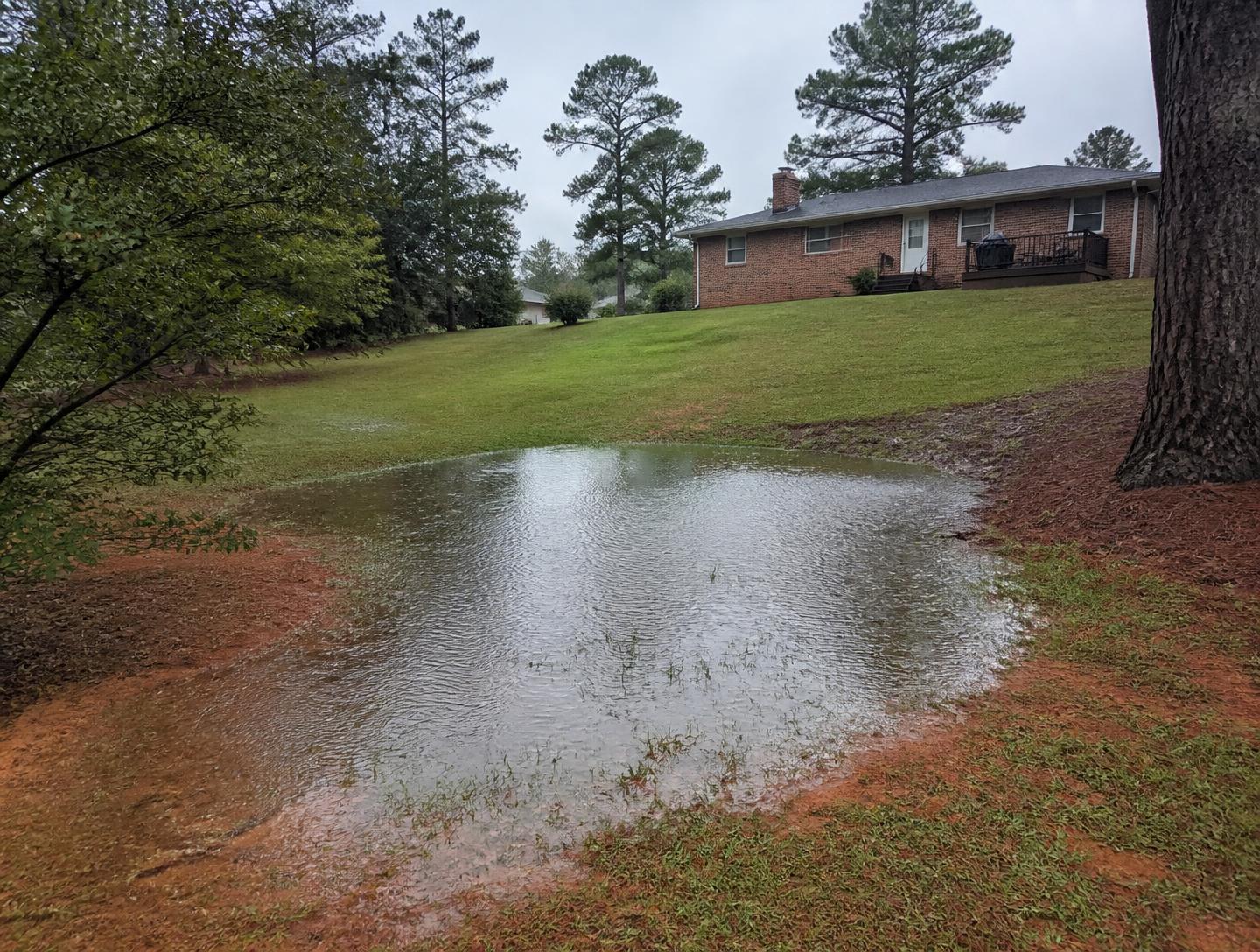
A yard drainage plan looks at three things in order: where water enters the property, where it travels, and where it can legally and practically leave. A backyard drainage contractor in Greenville who skips the third question often ends up moving a puddle from one part of the lawn to another.
- Roof volume — how many downspouts discharge within a few feet of the foundation or into a flat lawn area.
- Surface grade — whether the ground slopes away from the house for the first several feet, or back toward it.
- Low areas — natural bowls in the lawn where water collects and stays after a storm.
- Neighboring property runoff — water arriving from uphill lots, common on Upstate subdivision hillsides.
- Discharge point — a lower elevation on the property, a swale, a street edge, or a daylight point downhill.
Why clay changes the plan
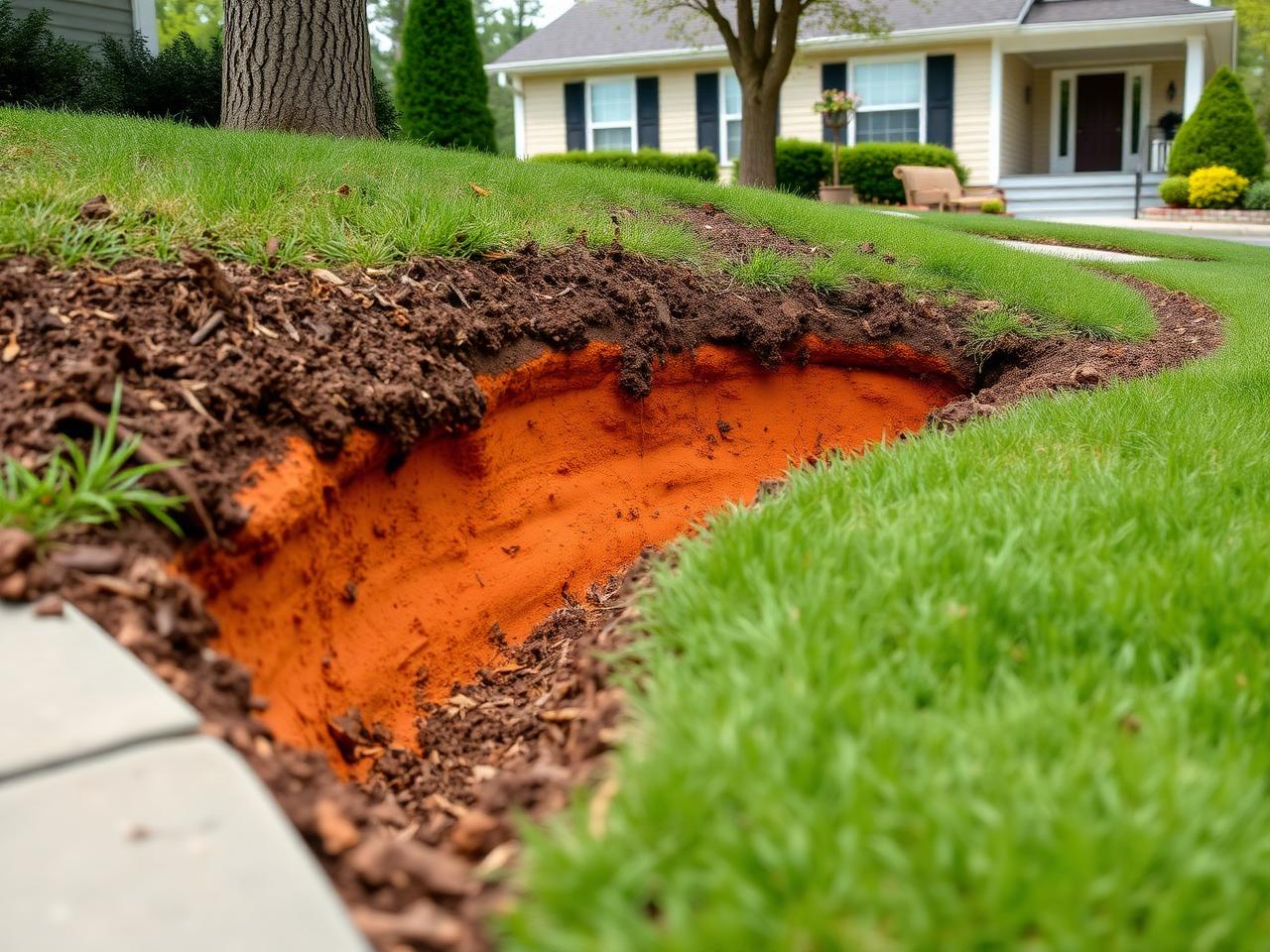
Upstate red clay infiltrates water slowly. On sandier soils, a shallow low spot may drain on its own within hours. On clay-heavy lots around Greenville, the same low spot can stay saturated for days after a heavy rain.
That means the design usually leans on moving water across or through the property rather than expecting the soil to absorb it. Dry wells and infiltration-only approaches are far less dependable here than a routed, positive-outlet system.
Common yard drainage components
Surface collection
Catch basins and grated inlets set at the low points that already collect water, tied into solid pipe.
Subsurface collection
A French drain — perforated pipe, washed stone and filter fabric — where saturation is broad rather than a single puddle.
Roof water routing
Buried downspout lines that take gutter volume past the foundation and planting beds before releasing it.
Shaping the ground
Regrading and swales that change the path water takes before any pipe is even considered.
How a project usually sequences
- 01Walk the lot and note where water shows up — stains, moss, matted grass, silt lines and eroded clay all record the last storm.
- 02Confirm elevations, including where a pipe could daylight without dumping onto a neighbor.
- 03Decide what needs collecting versus what only needs redirecting. Grading is often cheaper than pipe.
- 04Install collection points, connect solid conveyance pipe, and set the discharge.
- 05Restore soil, seed or sod, and check performance during the next real rain.
Not every wet yard needs a French drain. Some Greenville properties are solved with regrading and two buried downspout lines. The point of an assessment is to find the smallest system that reliably works.
Signs your yard needs a drainage plan, not a patch
- Standing water that lingers more than a day after rain stops.
- Sections of lawn that stay spongy while the rest dries out.
- Mulch or gravel washing across a walk or driveway during storms.
- Mosquitoes concentrating in the same yard corner every summer.
- Water marks or damp crawlspace conditions along one wall of the home.
Questions homeowners ask
How long does standing water usually take to drain in Greenville clay soil?
It varies with slope, compaction and how much water arrives. On clay-heavy Upstate lots, water sitting in a low area for a day or more after rainfall is common, and that lingering saturation is usually what pushes homeowners toward a drainage plan.
Do I need to fix drainage before landscaping or sod?
Generally yes. New sod, beds and irrigation placed over an unresolved wet area tend to fail in the same spot. Drainage work is disruptive to turf, so it is normally done before planting rather than after.
Can drainage water be sent onto a neighbor's property?
Discharging concentrated runoff onto an adjoining lot is a common source of disputes and can create liability. A discharge point should be chosen carefully, and local rules and HOA requirements should be checked as part of planning.
What information helps most when I submit a request?
Photos taken during or right after a rain, the approximate size of the wet area, and a note about whether the water is near the house, in the middle of the yard, or at the bottom of a slope.
Keep reading
Send the details of your wet yard
Describe the low spot, the slope and what the water does after a storm. A drainage professional serving your part of the Upstate can review it.