The problem with a splash block
An extension or splash block moves roof runoff a few feet. On a Greenville lot with clay soil and even a mild slope back toward the house, a few feet is not enough — the water simply follows the grade back to the foundation, saturates the bed, and keeps that side of the yard permanently soft.
- Mulch washing out of foundation beds after every storm.
- A trench or bare clay channel forming under the downspout outlet.
- Damp crawlspace conditions concentrated on one wall of the home.
- Green algae or moss growth along a specific stretch of siding or masonry.
- A lawn strip beside the house that never fully dries.
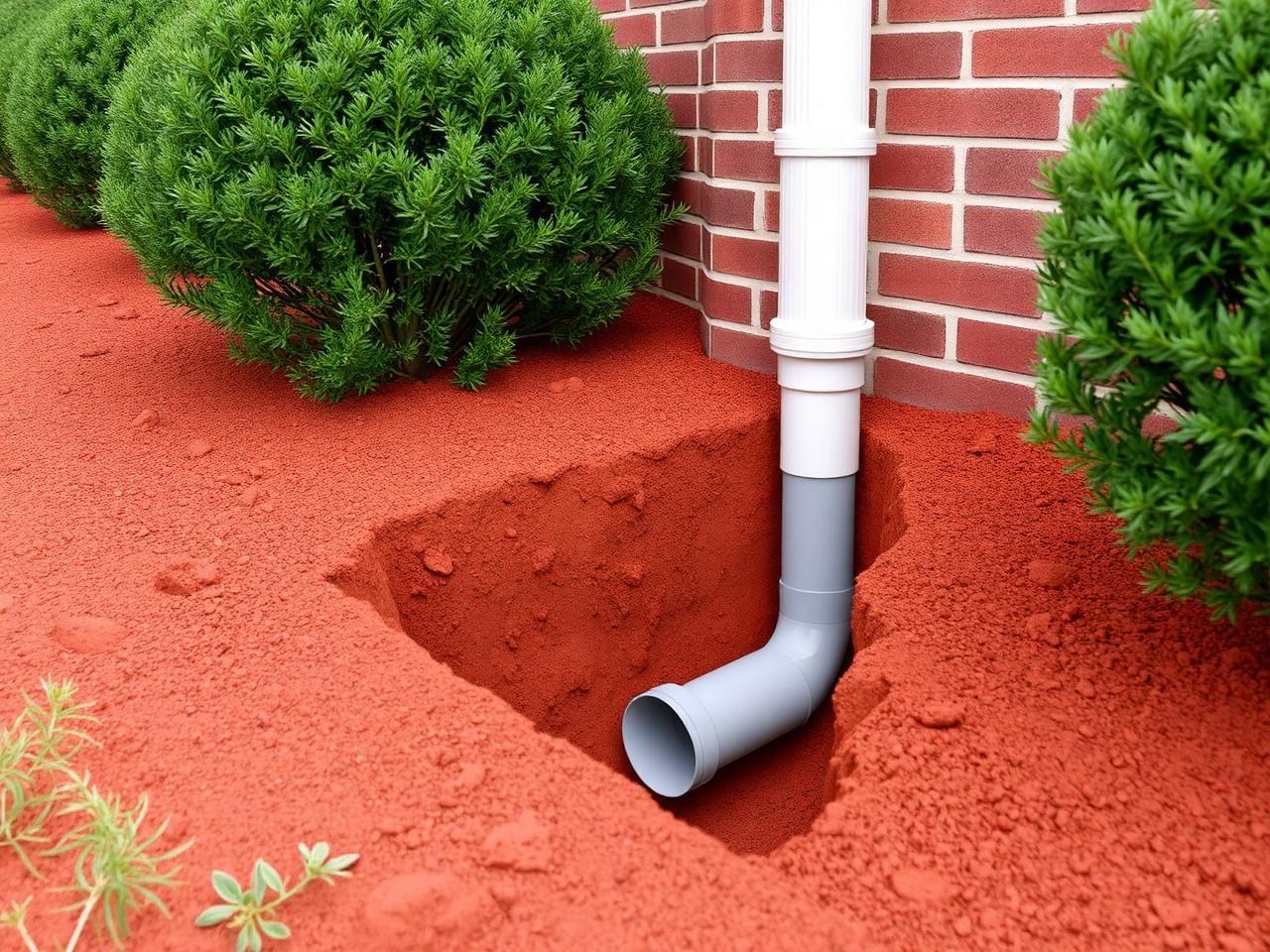
How a buried line is built
The downspout is cut and tied into solid, smooth-wall pipe — not perforated pipe, which would release the water right back into the soil next to the house. The line is trenched with fall away from the structure.
Discharge is either a daylight point at a lower elevation, a pop-up emitter in the lawn, or a catch basin that serves several lines at once. Cleanouts and a debris-managed inlet keep the run serviceable, because gutters send grit and shingle granules down the pipe.
Choosing a discharge method
Symptom
Daylight outlet
- Requires enough elevation drop across the lot.
- Most reliable — gravity does all the work.
- Outlet must stay visible and clear of mulch and turf.
Likely direction
Pop-up emitter
- Works on flatter lots with limited fall.
- Sits flush in the lawn and opens under pressure.
- Needs correct pitch and periodic checking to avoid backing up.
Downspout lines and yard drain lines are not interchangeable. Roof water carries grit and needs solid pipe and cleanouts; a perforated line handling roof volume in clay soil will silt quickly.
A note on scale
Rainfall across the Upstate is frequent and can be intense in summer storms. A single roof plane feeding one downspout produces far more water in ten minutes than most homeowners expect, which is why undersized or partially blocked buried lines surface as problems so quickly.
Questions homeowners ask
Can buried downspouts freeze in Upstate South Carolina?
Extended freezing is not the routine concern here that it is farther north, but a line that holds standing water because of poor pitch can be a problem in any season. Correct fall and a clear outlet matter more than depth.
Should buried downspout pipe be corrugated or smooth-wall?
Solid smooth-wall pipe is generally preferred for roof water. It resists sediment buildup better than ribbed corrugated pipe and is easier to clear if debris does accumulate.
How far from the house should roof water be released?
Far enough that the discharge point is downhill of the foundation and does not drain back toward it. The controlling factor is the grade of the lot, not a fixed distance.
Can buried downspouts tie into an existing French drain?
Sometimes, but only if the existing system has the capacity and a solid conveyance section. Feeding high-volume roof water into a perforated collection line often overwhelms it.
Keep reading
Roof water landing in the wrong place?
Tell us how many downspouts discharge near the house and what the ground does there after rain.