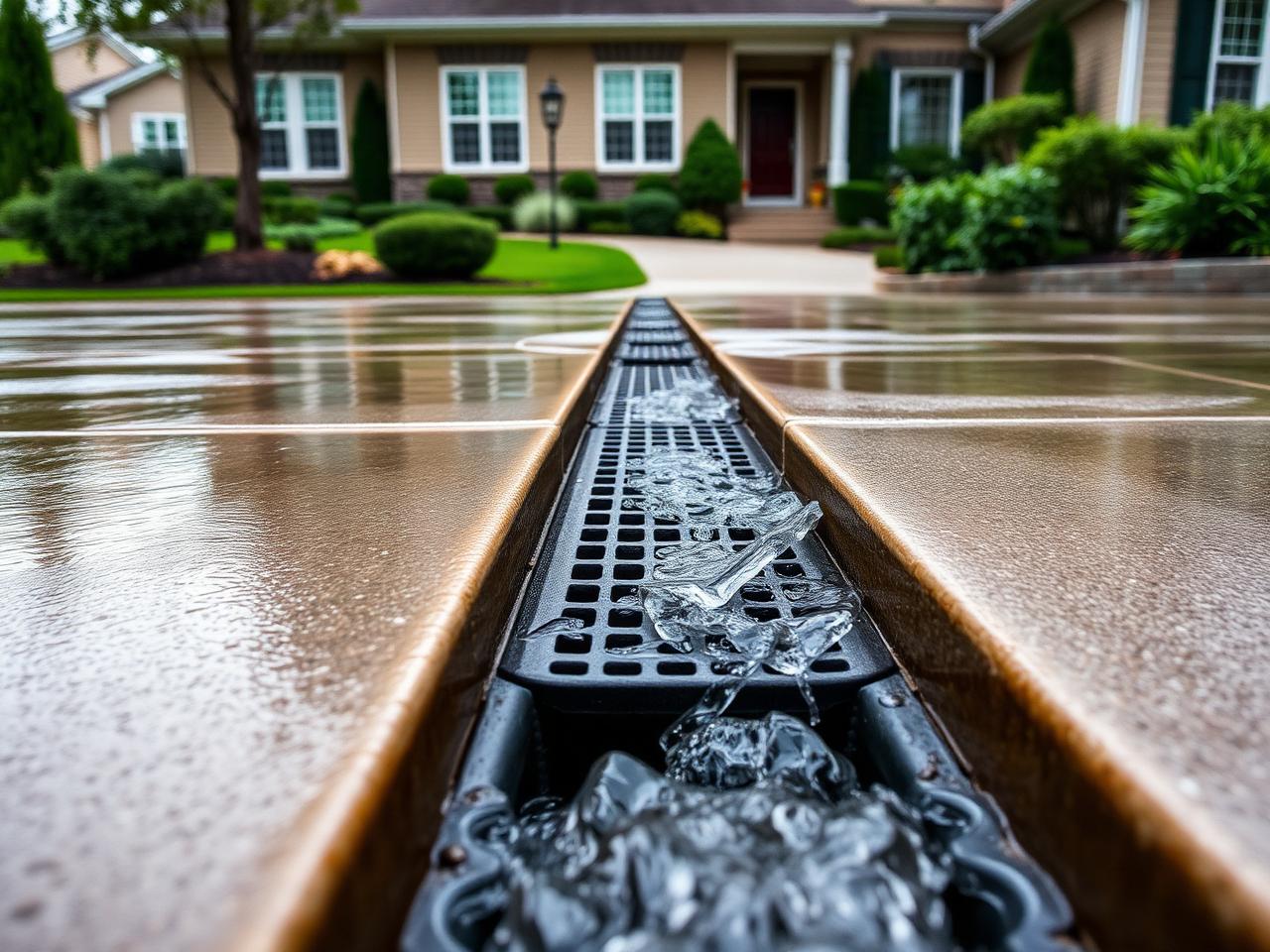
Read the driveway before choosing a fix
Symptom
Symptom
- Water sheets down the drive toward the garage.
- A puddle sits at the apron for hours after rain.
- Clay and gravel wash out along one edge.
- Water crosses the drive from an uphill neighbor.
Likely direction
Usual direction
- A channel drain across the drive above the garage.
- A catch basin at the true low point plus a piped outlet.
- Edge grading, a swale, or a shaped shoulder to carry flow.
- Interception uphill of the pavement before it ever arrives.
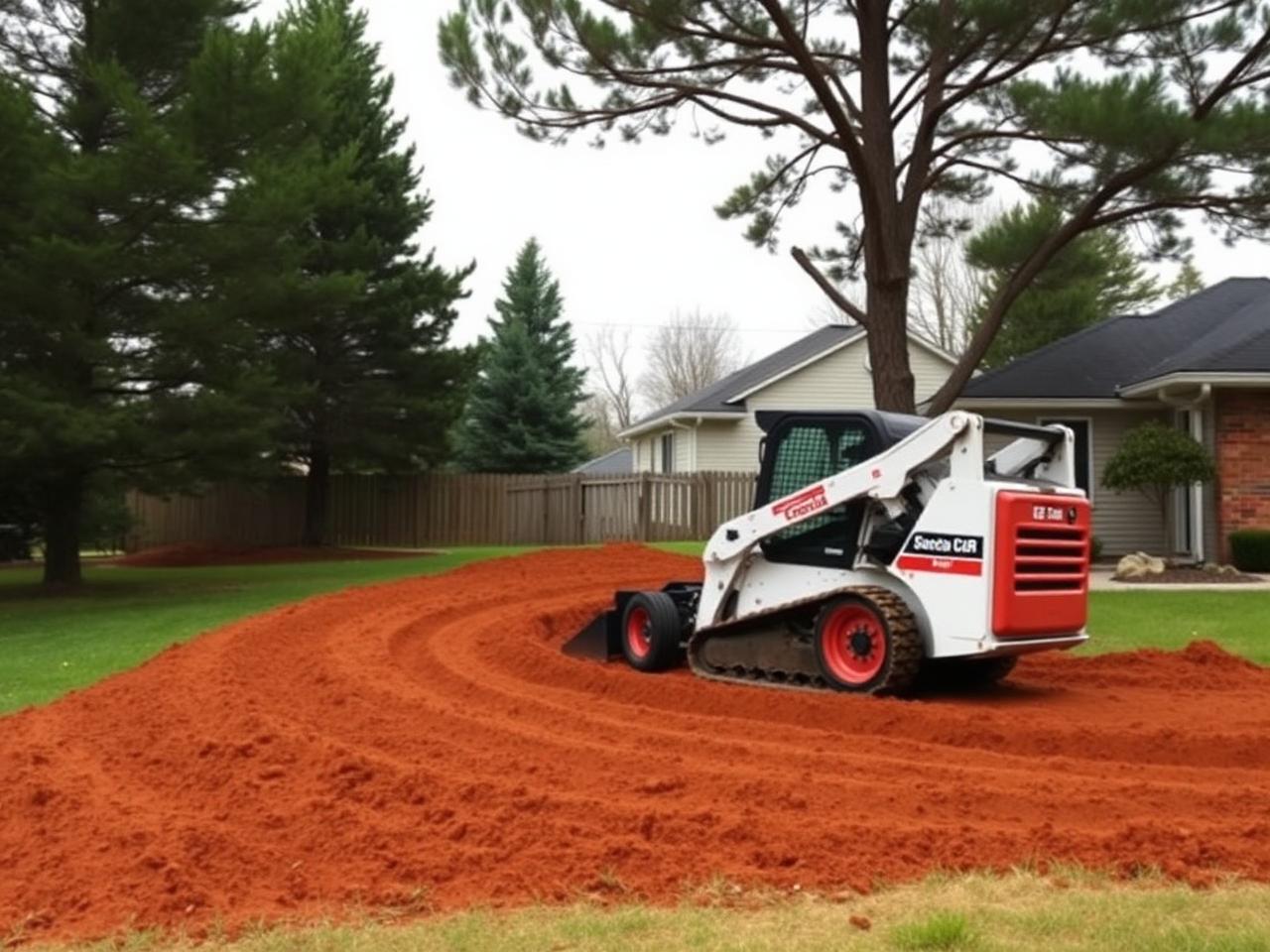
The uphill half of the problem
Many Greenville driveway problems are not really driveway problems. Water arrives from lawn above the pavement, from a neighbor's slope, or from downspouts discharging onto the drive.
Cutting the volume before it hits the concrete is usually cheaper than trying to capture all of it at the bottom. That can mean a swale along the upper edge, a regraded shoulder, or rerouting a downspout line away from the driveway entirely.
Solutions used on Upstate driveways
Channel drain across the drive
Linear interception ahead of a garage door or a low apron, encased in concrete for vehicle loads.
Catch basin at the low corner
Best where water collects at one defined point rather than crossing the full width.
Shoulder or edge swale
A shaped grassed channel that carries runoff along the drive instead of across it.
Regrading the approach
Changing the pitch of adjacent lawn so less water reaches the pavement in the first place.
Why gravel and paver drives behave differently
Gravel drives on clay subgrade look permeable but usually are not once the base compacts and clay fines fill the voids. They erode in defined ruts, which shows exactly where flow concentrates — useful information for placing a swale or basin. Paver drives can shed or infiltrate depending on how they were built, so the base detail matters more than the surface appearance.
Water reaching a garage slab or a walkout doorway deserves prompt attention. Repeated intrusion affects finishes, stored belongings and the slab edge itself.
Questions homeowners ask
Why does my driveway flood only during heavy storms?
Because capacity is the issue rather than slope. The existing path handles ordinary rainfall but is overwhelmed by intense Upstate summer downpours, which points toward interception with more capacity rather than a minor grade change.
Can I add drainage without replacing the driveway?
Usually. Channel drains are retrofitted by saw-cutting a section, and basins can be set in the adjacent lawn or at the apron edge. Full replacement is only necessary when the slab pitch itself is the core problem.
What if runoff comes from a neighbor's property uphill?
Interception along the property boundary — a swale, a drain line, or a graded shoulder — is the practical approach. Where the volume is significant, it is worth reviewing local requirements and any HOA rules before construction.
Does driveway drainage help with foundation water?
It can, when the driveway is the path delivering water toward the house. It does not address roof runoff or subsurface water, which need their own solutions.
Keep reading
Water heading for your garage?
Send the driveway slope, where the water enters, and what happens at the bottom during a storm.